
Your destination
About Cheltenham Spa
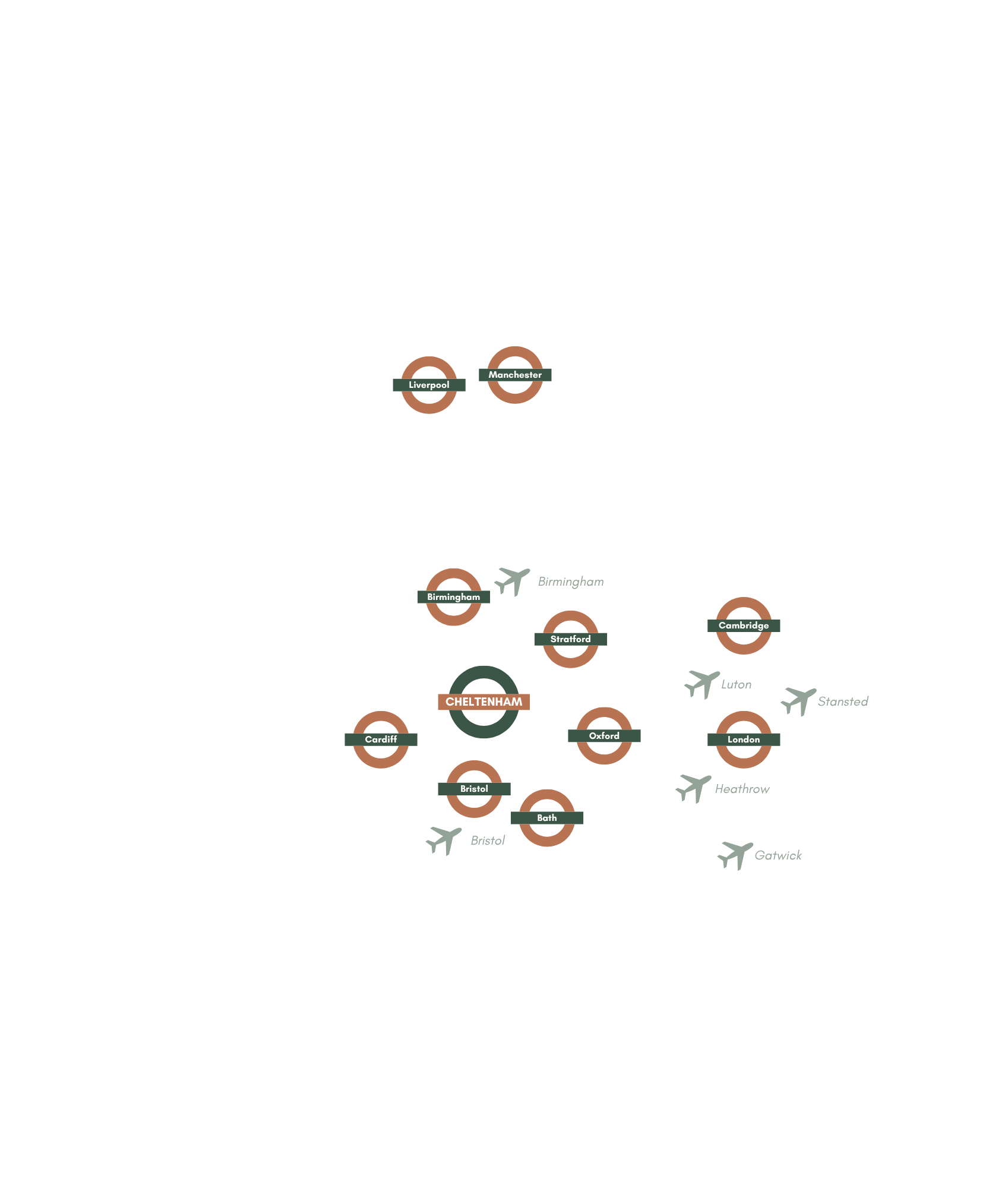
Cheltenham is a Regency spa town of 121,000 people in Gloucestershire, in the south-west of England, on the edge of the Cotswolds. It is known as the most complete Regency town in Britain, and for world-class horse racing, excellent schools and a calendar of festivals that runs all year — jazz, science, literature, food and film. It is safe, walkable, and unusually well placed: the Cotswolds are fifteen minutes away, Oxford and Bristol an hour, Bath an hour and a quarter, and central London two hours.
- Population
- 121,000A town, not a city
- A spa since
- 1716Over 300 years
- Cotswolds
- 15 minutesFrom the town centre
- London
- 2 hoursFor a day trip
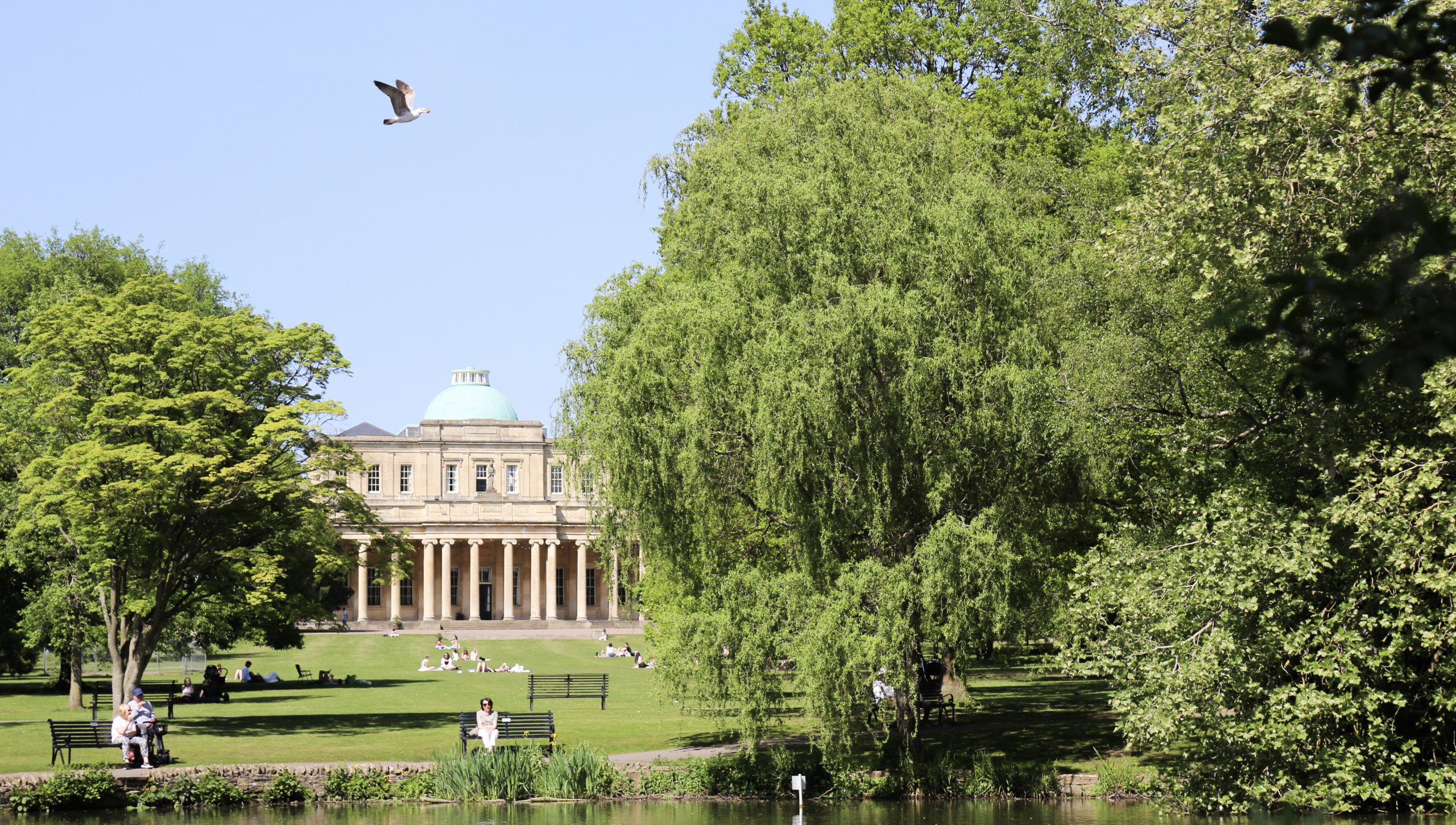
Pigeons, spa water and a king
Cheltenham became famous over 300 years ago, in 1716. According to local legend, people noticed unusually healthy pigeons pecking at the ground and investigated — finding a natural spring. Doctors decided the "spa water" was very good for the health, and word travelled.
In 1788, King George III came to drink the water. That was the moment the town's fortunes changed. Cheltenham became enormously popular with the rich and the fashionable, and because it was a holiday destination for wealthy visitors, builders responded with gorgeous streets, wide crescents, large parks and elegant houses.
That style is called Regency, and Cheltenham has more of it, better preserved, than anywhere else in the country. Walking to class here means walking past stucco terraces, wrought-iron balconies and garden squares that have looked much the same for two hundred years.
Cheltenham is a beautiful and historic town. It is a very safe, clean, and friendly place to live and study. inlingua Cheltenham brochure
The town
Swipe or scroll to look around.
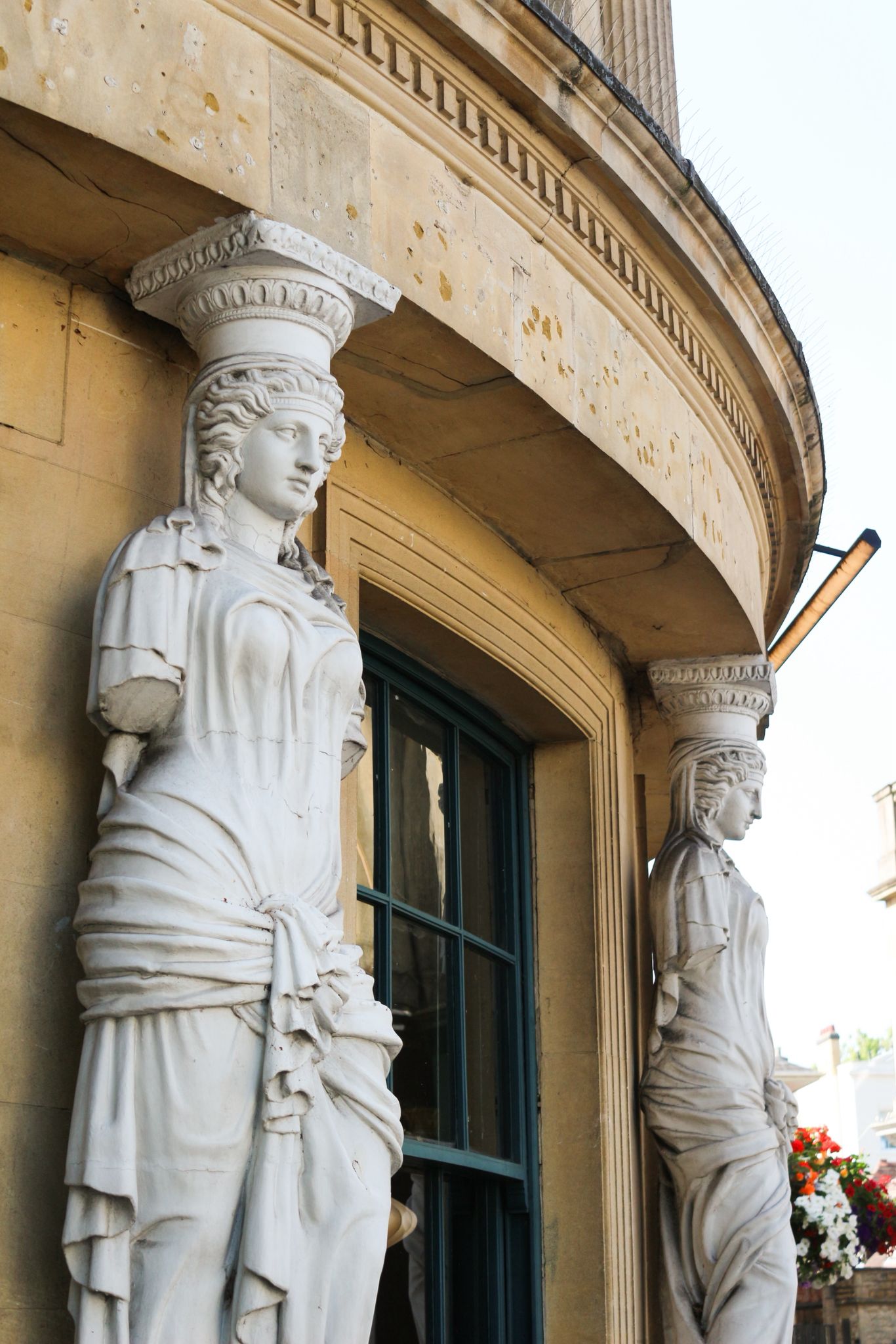
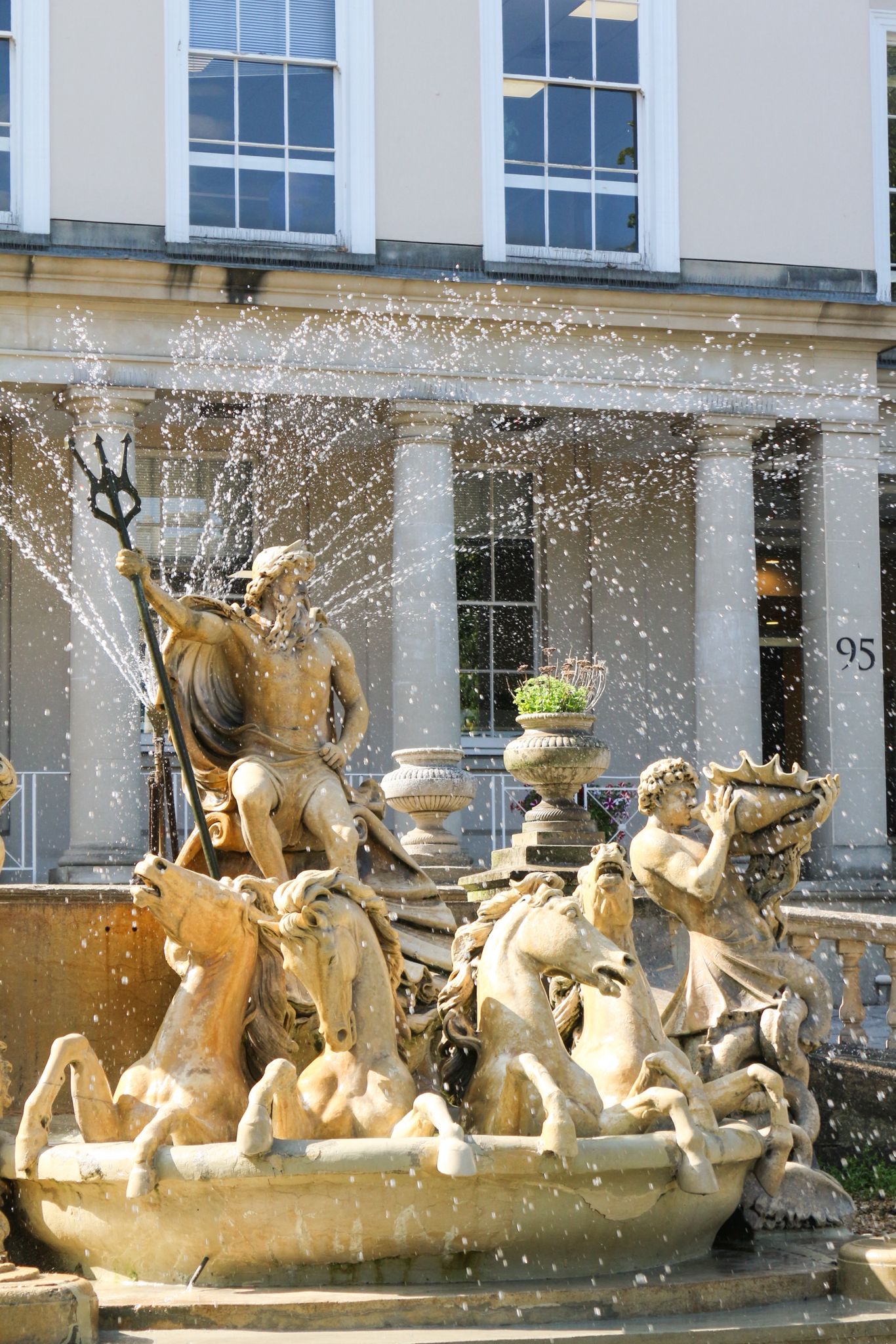
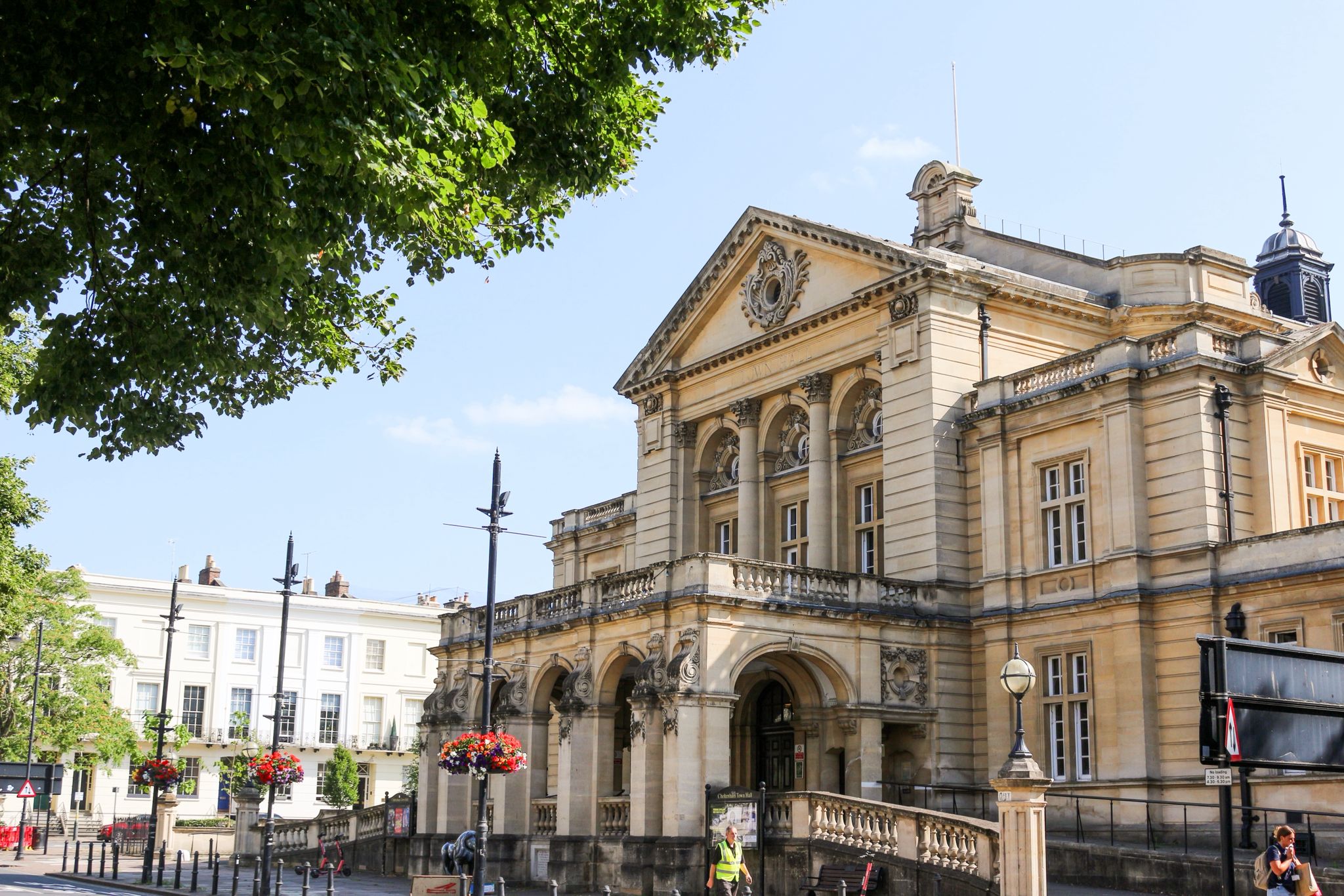
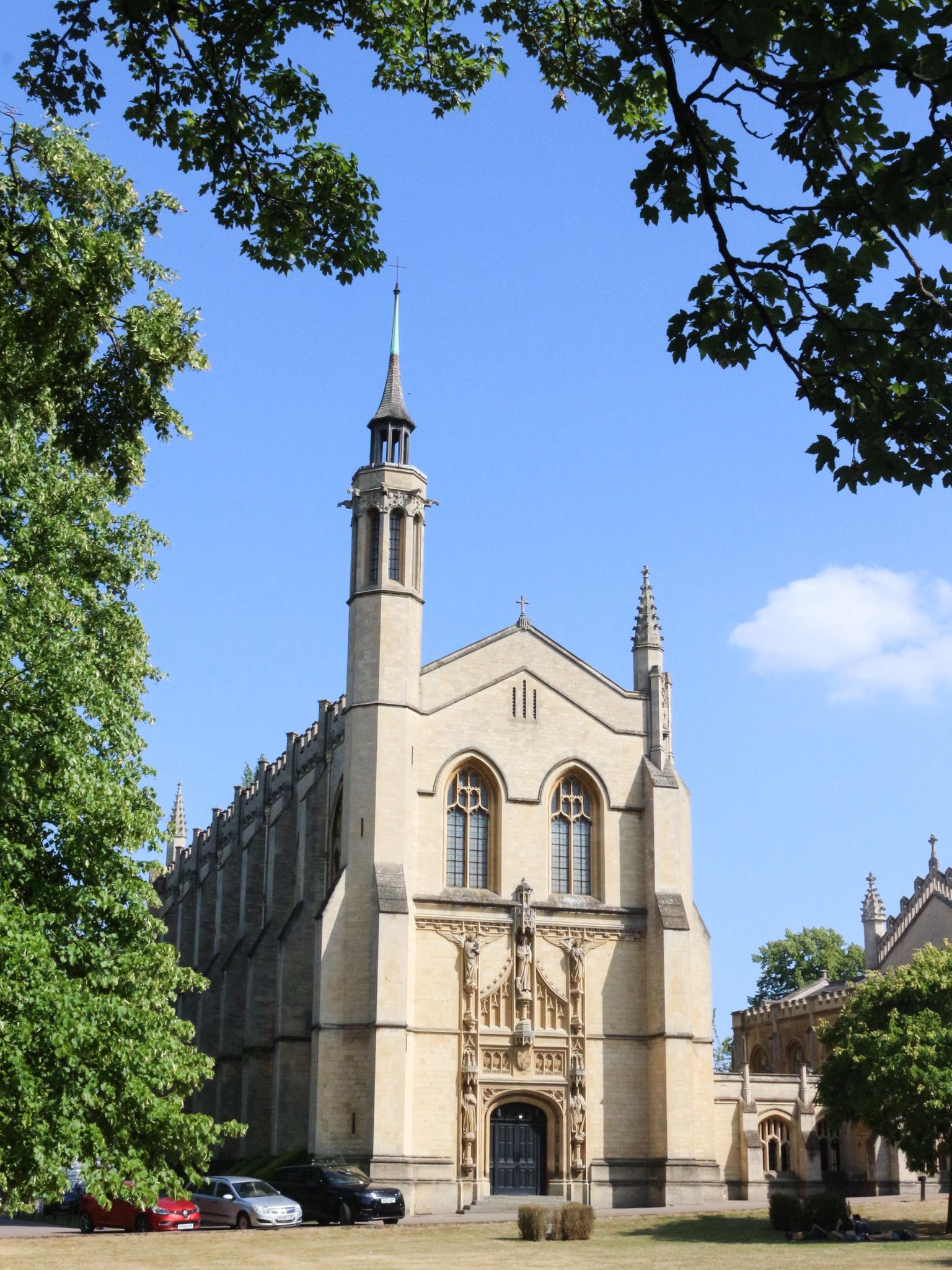
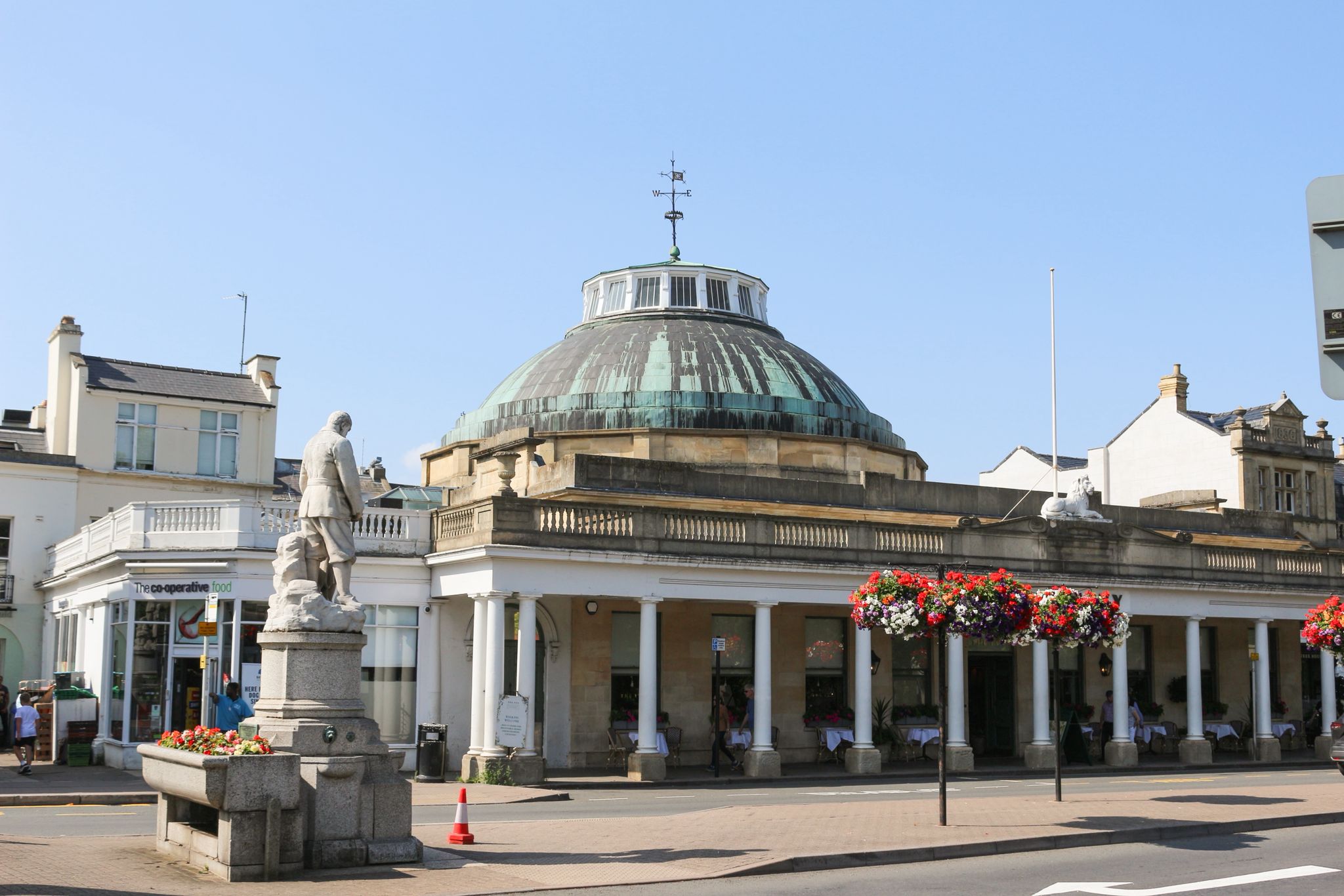
Five photos — swipe, drag, or use the scroll bar.
Where Cheltenham is
Cheltenham sits in Gloucestershire, in the south-west of England, right on the edge of the Cotswolds. Its position is genuinely useful: far enough from London to be affordable and calm, close enough that a Saturday in the capital is easy.
Places worth a day trip
| Destination | Journey time | Why go |
|---|---|---|
| The Cotswolds | 15 minutes | Honey-coloured villages and open countryside, an Area of Outstanding Natural Beauty |
| Gloucester | 15 minutes | A cathedral city, and the docks |
| Stratford-upon-Avon | 45 minutes | Shakespeare's birthplace |
| Oxford | 1 hour | Colleges, museums, and the oldest university in the English-speaking world |
| Bristol | 1 hour | Harbourside, street art, the suspension bridge |
| Cardiff | 1 hour | The Welsh capital — a different country in an hour |
| Bath | 1 hr 15 min | Roman baths and Georgian crescents, a UNESCO World Heritage city |
| Stonehenge | 2 hours | Five thousand years old and still unexplained |
| Central London | 2 hours | All of it |
Airports
| Airport | Journey time |
|---|---|
| Bristol (BRS) | 1 hr 15 min |
| Birmingham (BHX) | 1 hr 15 min |
| London Heathrow (LHR) | 2 hours |
| London Gatwick (LGW) | 2 hr 30 min |
| London Luton (LTN) | 3 hours |
| Stansted (STN) | 3 hours |
Getting here
Private airport transfers, direct National Express coaches from Heathrow, and trains to Cheltenham Spa station from across the country. Full prices and journey times.
See airport transfers →The home of jump racing
The Cheltenham Festival
Every March, Cheltenham Racecourse at Prestbury Park hosts the most important week in National Hunt racing. The Cheltenham Festival runs over four days — Champion Day, Ladies Day, St Patrick's Thursday and Gold Cup Day — and the town fills with racegoers from across Britain and, in enormous numbers, from Ireland.
The week builds to the Cheltenham Gold Cup on the Friday, the most prestigious contest in the sport. Racing starts each afternoon against the backdrop of Cleeve Hill, and the roar that greets the first race of the week is famous enough to have its own name.
You do not need to know anything about horses to enjoy it. Most students who go find the atmosphere is the point.
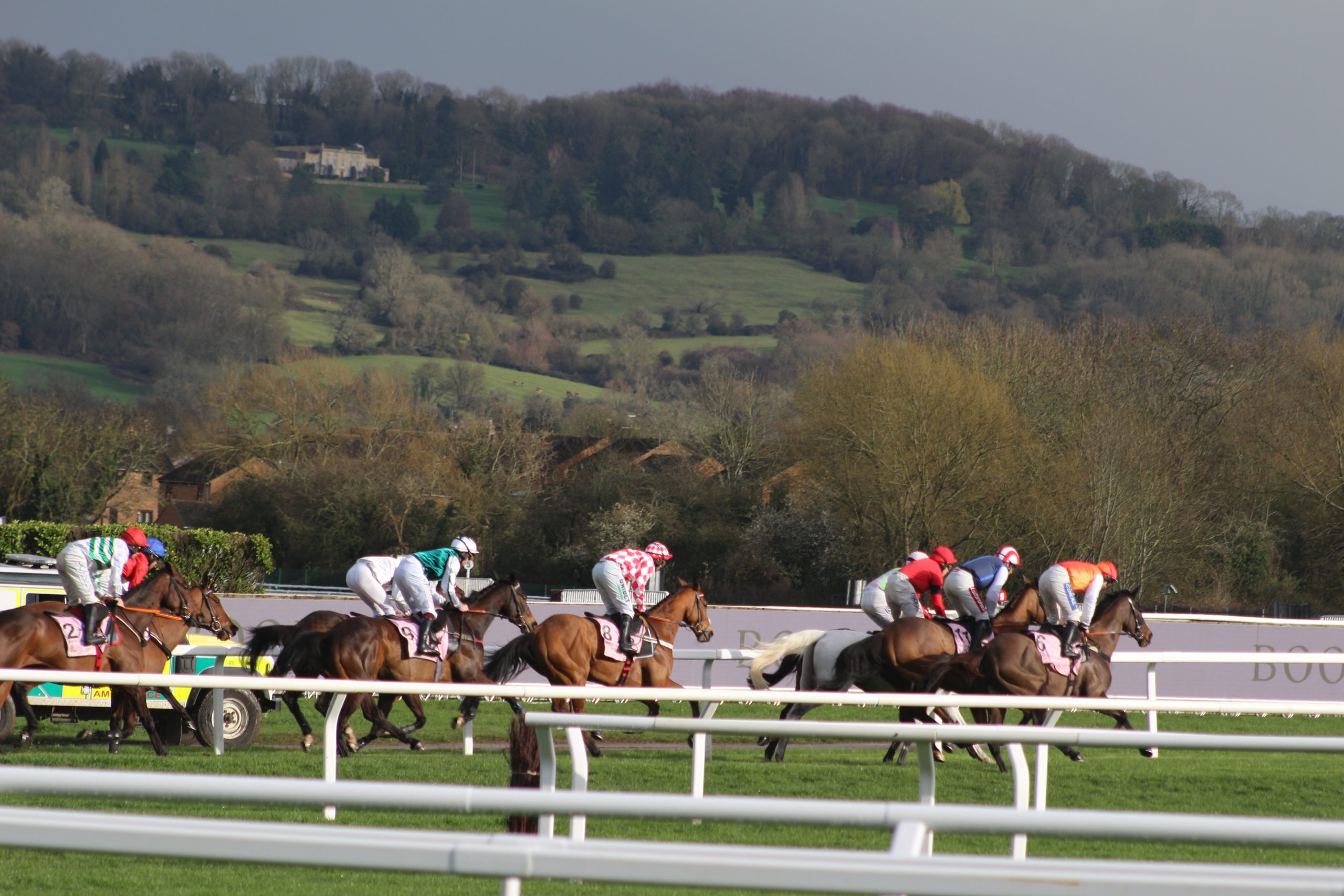
The Festival is not the only meeting. Cheltenham also holds the April Meeting, the Showcase in October and the November Meeting, so there is racing to see through most of the season.
Festival dates change each year. Check The Jockey Club for this season's dates and tickets, and ask our reception team — we can often help students get to a meeting.
A festival town
Cheltenham is famous for being one of England's best festival towns. All through the year there are festivals, events and celebrations that bring visitors from around the world — which means that whenever you come, something is happening.
It is easy to find an event that matches whatever you are interested in, and nearby towns like Tewkesbury, Stroud and Gloucester run their own through the year too.
| When | What |
|---|---|
| March | The Cheltenham Festival horse racing |
| April | The April Meeting horse racing |
| April – May | Cheltenham Jazz Festival |
| May | Gloucester Tall Ships |
| May – June | Cheltenham Fringe Festival |
| June | Cheltenham Science Festival |
| July | Summer Jam Music Festival · Cheltenham Paint Festival · Tewkesbury Medieval Festival · Cotswold Fest |
| September | Cheltenham International Film Festival |
| October | Cheltenham Literature Festival · The Showcase horse racing · Cheltenham Oktoberfest |
| November | The November Meeting horse racing · Christmas lights at Pittville Pump Room |
| December | Cheltenham Christmas Market · the ice rink · the Christmas pantomime |
We can help you get there
If you want to go to a festival, ask our reception team. We can often help you buy tickets or advise on what is worth seeing, and we sometimes organise group trips so students can go together. See the social programme.
A safe place to live and study
For most students — and for every parent — this is the question underneath all the others. Cheltenham answers it well.
A very low crime rate
Students feel safe in the town centre and in the residential areas where they live. This is a town where walking home in the evening is unremarkable.
Purple Flag
Cheltenham holds a Purple Flag award, the national accreditation for town centres that are safe, well managed and welcoming in the evening and at night.
Small enough to know
With 121,000 people, Cheltenham is a town rather than a city. Within a fortnight most students know their way around it, which is not something you can say of London.
Everything within reach
The school sits in the town centre, fifty metres from the high street. Shops, parks, cafés and cinemas are a walk away, and every local bus route passes close by.
Clean and green
Large public parks, tree-lined streets and the Cotswold hills fifteen minutes away. Cheltenham was built for people to walk around in, and it still works that way.
A calmer kind of study
You can concentrate on your English in a pleasant and tranquil environment, without the noise, expense and crowding of a bigger destination.
Everyday life here
Shopping
Regularly named one of the best towns to shop in the region, with a mix of well-known names, independent shops, department stores and boutiques where you can find things you will not see at home.
Arts and culture
An arts-focused town with three theatres, striking Regency and Georgian architecture, and some of the most interesting museums and galleries in the country — all a short walk from the school.
Eating and drinking
Excellent restaurants, cafés, pubs and bars, from traditional British pubs to places you would be pleased to find in a much larger city.
Evenings
A night-life scene for every taste — wine bars, pubs, restaurants, live music and clubs. Cheltenham is also a university town, so term-time evenings are lively.
For more on what is happening in and around the town, see Visit Cheltenham.
Common questions
Where is Cheltenham?
Cheltenham is in Gloucestershire, in the south-west of England, on the edge of the Cotswolds. It has a population of about 121,000. The Cotswolds and Gloucester are fifteen minutes away, Stratford-upon-Avon forty-five minutes, Oxford, Bristol and Cardiff an hour, Bath an hour and a quarter, and central London two hours.
Is Cheltenham a safe place to study?
Yes. The town has a very low crime rate and holds a Purple Flag award, the national accreditation for town centres that are safe and well managed in the evening. Students feel safe both in the centre and in the residential areas where they live, and the town is small enough to learn quickly.
What is Cheltenham famous for?
Three things above all. It is known as the most complete Regency town in Britain, thanks to the spa boom that followed King George III's visit in 1788. It is the home of jump racing, hosting the Cheltenham Festival and the Gold Cup every March. And it is a festival town, with jazz, science, literature, film and food festivals running through the year.
What is the Cheltenham Festival?
The most important meeting in National Hunt racing, held at Cheltenham Racecourse every March over four days — Champion Day, Ladies Day, St Patrick's Thursday and Gold Cup Day. There are 28 races including 13 at Grade 1, and the week finishes with the Cheltenham Gold Cup. Dates change each year, so check The Jockey Club website.
Why is Cheltenham called a spa town?
Because of a spring discovered in 1716, whose mineral water was believed to be good for the health. King George III came to drink it in 1788, which made the town fashionable and led to the Regency architecture it is known for today.
Is Cheltenham a good place to learn English?
It suits students who want immersion rather than a large international social scene. The people around you are predominantly British, the local accent is generally considered easy for learners to follow, and there is only one private English language school in the town — so you are not surrounded by other learners outside class. More about inlingua Cheltenham.
Come and study here
inlingua Cheltenham is the only private English language school in the town, in the centre, fifty metres from the high street. Courses start every Monday, all year round.
inlingua Cheltenham, Rodney Lodge, 9 Rodney Road, Cheltenham, Gloucestershire GL50 1HX · +44 (0)1242 250 493 · info@inlingua-cheltenham.co.uk · Last updated August 2026.